
How to Throw a Changeup Without Slowing Your Arm
Learn a simple changeup grip, fastball-like release, practice progression and fixes for pitches that stay firm, spike or cut.
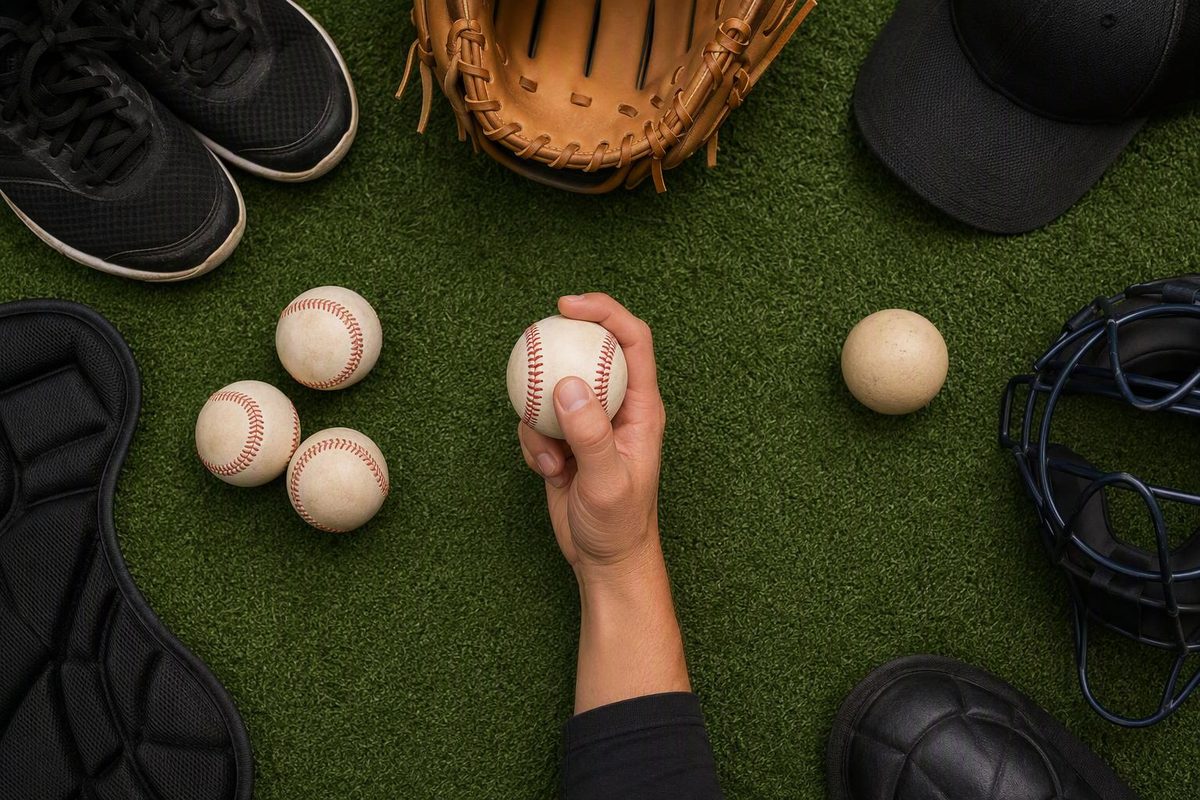
A changeup is an off-speed pitch designed to look like a fastball early and arrive more slowly. MLB describes several changeup grips, but notes two common features: the ball sits deeper in the hand and the pitch uses nearly the same motion as a fastball (MLB pitch-type glossary). The grip—not an obviously slower delivery—should create most of the speed change.
For a developing pitcher, the first goal is not dramatic movement or a particular radar-gun gap. It is a pitch that comes out of a normal delivery, reaches the intended area and feels comfortable. Build it after establishing a repeatable four-seam fastball grip.
Start with a three-finger changeup grip
This simple grip works well for pitchers who cannot comfortably form a circle around the ball.
- Place the index, middle and ring fingers across the top of the baseball. Let the middle finger sit near the center.
- Move the ball slightly deeper into the hand than it sits for a fastball. Leave a little space between the ball and palm rather than jamming it into the palm.
- Put the thumb underneath for support. Rest the pinky lightly along the side.
- Hold the ball securely without squeezing it.
Checkpoint: Turn the hand over and gently shake it. The ball should stay secure without stiff fingers or forearm tension.
Hand size matters. If three fingers feel crowded, shift them around the seams until the grip is comfortable. Seam position can improve feel, but there is no single arrangement every pitcher must use.
Circle-change alternative
A pitcher with enough hand size can place the middle and ring fingers on top, rest the pinky along the side, and bring the thumb and index finger toward each other on the opposite side. They do not have to form a perfect circle.
Another variation puts the middle and ring fingers together in a two-seam orientation, with the thumb directly beneath them and the index and pinky resting on the sides. Pitching coach Dan Blewett demonstrates that setup in his changeup-grip guide. It is an option, not a universal “best” grip.
Do not stretch small fingers merely to copy a picture. Return to the three-finger grip if the circle version makes the hand tense or the ball difficult to control.
Throw it with a fastball-like delivery
Use the same tempo, direction and arm action as the fastball. The hitter should not be able to identify the changeup because the pitcher takes a shorter stride, opens early or visibly eases the arm forward.
Keep the cue simple: Fastball delivery, changeup grip.
Throw through the catcher’s glove rather than trying to place the ball into it. Keep the fingers behind and on top of the ball through release. Do not deliberately snap the wrist, turn a doorknob or force the hand inward. Let the arm finish naturally.
The pitch may show some arm-side run or drop, but movement is secondary. A mostly straight changeup can still disrupt timing if it is delivered convincingly and commanded.
A four-step practice progression
Warm up for the day before working on the pitch; use a gradual baseball warm-up rather than treating changeup throws as the warm-up.
1. Learn the grip without throwing
Move from the fastball grip to the changeup grip and back again. Make 8–10 slow exchanges while looking at the ball, then repeat without looking.
Checkpoint: The pitcher can find the grip without digging around in the glove for several seconds.
2. Play short catch
From about 30–45 feet, make 6–8 easy changeup throws. Use normal throwing rhythm, not maximum effort. Ask the partner to report only whether each throw arrived slower than the fastball and whether the hand or arm action looked different.
If the pitcher has to push the ball to reduce speed, adjust the grip before increasing distance.
3. Compare it with the fastball
At a comfortable catch distance, alternate one fastball and one changeup. Aim both at the same chest-high target. Judge each pair on three questions:
- Did the deliveries look alike?
- Did the changeup arrive later?
- Could the partner catch both near the target?
This comparison is more useful initially than chasing a prescribed velocity gap.
4. Add a strike-zone target
On flat ground or in a supervised bullpen, throw small sets such as two fastballs followed by one changeup. After the pitch becomes controllable, mix the order so the catcher does not know what is coming.
A useful early standard is not “nasty” movement. It is the ability to throw the changeup to a catcher’s large target without changing the delivery. End the work before mechanics or command fade. The principles in practice makes permanent apply: one task, one cue and feedback the pitcher can use.
Fix common changeup problems
The pitch is almost as hard as the fastball
Move the ball a little deeper or put slightly more responsibility on the middle and ring fingers. Change only one feature at a time. Do not solve the problem by slowing the arm.
The ball keeps hitting the dirt
Check whether the pitcher is squeezing, hooking the fingertips over the ball or trying to manufacture drop. Try a less-deep grip, keep the fingers on top and throw through the glove.
The pitch floats high
A floating changeup often accompanies a guided delivery. Compare it immediately with a fastball and look for a shorter stride, reduced arm speed or an early upright finish. Reset with the fastball, then keep the same ground-up throwing sequence while changing only the grip.
The ball cuts to the glove side
First remove intentional wrist action. Then check whether one finger is dominating the release. Return to balanced pressure and a comfortable grip. Do not force arm-side movement as the opposite correction.
The grip is uncomfortable
Abandon it. A pitcher does not earn extra credit for a textbook-looking circle. Try the three-finger version, make a small seam adjustment or ask a qualified coach who can observe the release.
Age, workload and arm comfort
The changeup fits early pitch development. MLB Pitch Smart advises pitchers ages 9–12 to avoid pitches other than fastballs and changeups. For ages 13–14, it says breaking pitches can follow development of a consistent fastball and changeup (ages 9–12 guidance, ages 13–14 guidance). Those pages also set out age-specific pitch-count and rest recommendations and broader limits on annual workload.
Laboratory evidence should not be turned into a promise that any pitch is injury-proof. A study of 111 healthy pitchers, ranging from youth to major-league level, found lower shoulder and elbow kinetics for changeups than for fastballs. It also found mechanical differences among pitch types (Penn State research summary). A grip does not erase the effects of excessive volume or fatigue.
Include changeup practice when planning the day’s total throwing. Stop throwing if the pitcher develops pain, unusual tightness, numbness or a sudden loss of control. Persistent or recurring symptoms need evaluation by a qualified medical professional; grip advice cannot diagnose an arm problem.