
Make Every Pitching Rep Serve a Clear Purpose
Build better pitching reps with one task, one cue, useful feedback, game-like variation, later retesting, and firm safety limits for youth pitchers.
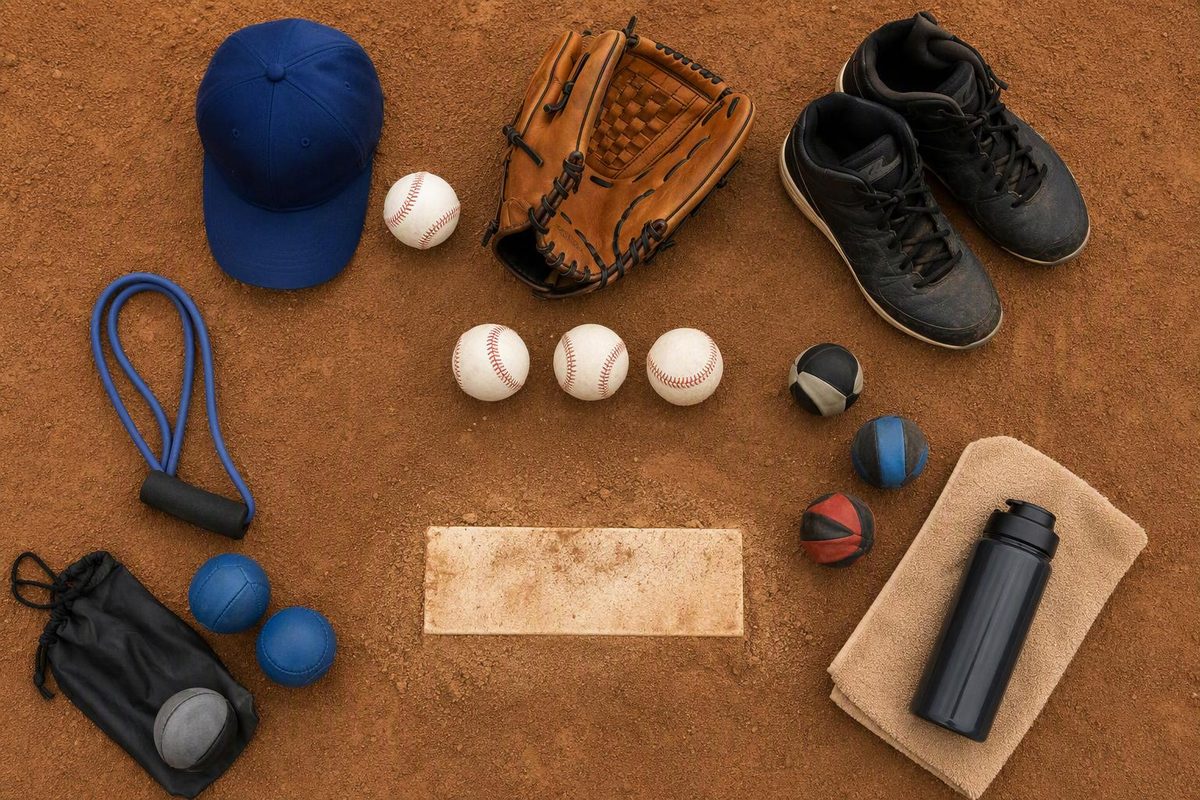
“Practice makes permanent” is a useful warning, not a literal law. One bad throw does not doom a pitcher, and repetition alone does not make a movement correct. The better rule is: repeat a clear task, use feedback, and check whether the skill returns later.
Choose the session stage and what the last round showed; the planner gives you the next practice step.
Plan the Next Pitching Round
Base the next task on the session stage and what the pitcher just showed.
Keep one familiar pitch, one target, and one cue. If the task remains stable, test it by changing one variable.
Method: the practice progression in this guide, informed by the cited motor-learning reviews and MLB Pitch Smart. Current league workload rules still apply.
Repetition Works Only When the Task Is Clear
A pitcher needs enough throws to become familiar with a grip, direction, and target. But repetition without a defined goal can become a series of rushed or overly hard throws with no useful adjustment between them.
Motor-learning research distinguishes practice performance—how a skill looks during the session—from retention, or whether the skill returns later. A 2024 systematic review found that random practice, in which tasks change frequently, improved retention in laboratory settings. Its advantage was almost negligible in applied settings, however, and the pooled effect among participants under 18 was negligible and not statistically significant. Variation may help, but it is not a magic formula for young pitchers (Scientific Reports systematic review).
A practical bullpen can use both approaches:
- Blocked practice to introduce the task: Repeat the same location or pitch for a short round.
- Variable practice to test it: Change the target, count, or situation so the pitcher must make a fresh decision.
Blocked work is not automatically mindless, and variable work is not automatically better. The choice depends on whether the pitcher is learning the task, testing it under changing conditions, or trying to reproduce it after time away.
Define a Good Rep Before Throwing
Give each round three parts:
- A task: Throw a four-seam fastball to the catcher’s glove-side target.
- One cue: “Send the ball through the glove.”
- A checkpoint: Record whether the ball reached the intended lane at controlled effort.
The checkpoint must be observable. “Use better mechanics” is too broad. “Finish balanced enough to hold the landing for one second” can be seen. So can first-pitch strikes out of 10 attempts or misses grouped mostly to one side.
The cue should direct attention without asking the pitcher to manage several body parts during the delivery. If the round has multiple mechanical instructions, it is difficult to know which thought helped or what should change on the next throw.
Start with a familiar pitch. For ages 9–12, MLB Pitch Smart recommends fastballs and changeups while advising players to avoid other pitch types (Pitch Smart guidelines for ages 9–12). A pitcher still learning basic direction can begin with the four-seam grip rather than add a breaking ball just to make practice feel advanced.
Use a Short Feedback Loop
After each throw, let the pitcher answer first:
- Where did it go?
- Was that the intended target?
- What stays the same or changes on the next throw?
The coach can then add one brief observation. Feedback is information, not a speech. A systematic review of 23 school physical-education studies found strong evidence that feedback improved motor-skill learning compared with no feedback, although the evidence was less settled on the best format and content (systematic review in the International Journal of Environmental Research and Public Health).
When it fits the problem, favor a cue about the intended result. “Drive the ball through the catcher’s chest” may be easier to act on than a list of body positions.
In one study, 10- to 12-year-olds practiced a soccer throw-in with feedback directed either toward their body movements or the movement’s external effect. Frequent external-effect feedback produced better movement-form learning in immediate and delayed transfer tests than the comparison conditions. That was one soccer task, not pitching, so it supports trying simple outcome-directed language rather than treating it as a universal rule (study of external-focus feedback).
Video can help when it answers one question, such as whether the stride repeatedly lands across the target line. It should not become a frame-by-frame search for flaws after every throw. Choose the simplest training tool that supplies the needed feedback.
Build Practice in Five Steps
After a gradual baseball warm-up, use this sequence at a distance and effort appropriate for the pitcher.
1. Establish the Task
Throw a short round to one target with one pitch. Use controlled intent; do not score velocity.
Checkpoint: Can the pitcher state the target and cue before the next throw?
2. Find the Miss Pattern
Instead of labeling every miss “bad,” sort misses as arm side, glove side, high, or low. A pattern provides a problem to solve; random commentary does not.
A consistent miss is useful information. It gives the pitcher and coach something specific to address. Scattered misses may mean the task is too complicated, the effort is too high, or the pitcher needs to return to a more familiar pitch and target.
Checkpoint: Are misses becoming more predictable or more scattered?
3. Change One Variable
Move the target, introduce a ball-strike count, or alternate fastball and changeup. Do not change the grip, cue, target, and delivery at once.
The purpose of variation is to make the pitcher read the task again rather than repeat a memorized sequence. It also reveals whether command survives a small change in the environment.
Checkpoint: Does command survive the change without the pitcher adding effort?
4. Remove Some Help
Let the pitcher complete several throws without a mechanical reminder. The catcher still provides the target, and the result remains visible.
This is where the coach learns whether the pitcher can recognize the miss and choose an adjustment. If the delivery works only while the coach repeats a cue before every pitch, the skill is not yet independent.
Checkpoint: Can the pitcher identify the miss and choose the next adjustment independently?
5. Retest Later
Open the next session with the same task before reteaching it. Improvement that appears only at the end of one bullpen may be temporary.
Do not immediately restore every cue. Give the pitcher a chance to recall the target, execute the pitch, and evaluate the result. That delayed check says more about learning than the cleanest throw at the end of the previous session.
Checkpoint: Does the skill return after time away and without constant prompting?
Stop When Fatigue or Pain Changes the Task
“Practice makes permanent” should never mean “keep throwing until the motion looks right.” End or reduce the throwing portion when the pitcher can no longer perform the planned task at the planned effort. Stop for pain; symptoms need an appropriate medical evaluation rather than another mechanical cue.
Track bullpen pitches, warm-up throws, game pitches, and throwing for other teams so the adults involved can see the pitcher’s full workload. A bullpen does not exist separately from everything else the arm has done.
Pitch Smart advises ages 9–12 to follow pitch-count and rest limits, monitor fatigue, and take at least four months off from throwing each year, including two to three continuous months (MLB Pitch Smart). League rules may be more specific.
Little League sets game-pitch maximums by league age and requires as many as four calendar days of rest, depending on age and pitches thrown (Little League regular-season pitching rules). Follow the current rules for the player’s league and age group.
The goal is not a motion that never changes. Developing pitchers grow, adapt, and compete under different conditions. Productive practice gives them a clear task, useful feedback, and a chance to make the next adjustment—not merely a large pile of throws.