
Build a Comfortable Circle Grip Without Changing Your Delivery
Set a circle changeup grip, compare it with your fastball in catch play, and troubleshoot fit or release problems without adding youth throwing workload.
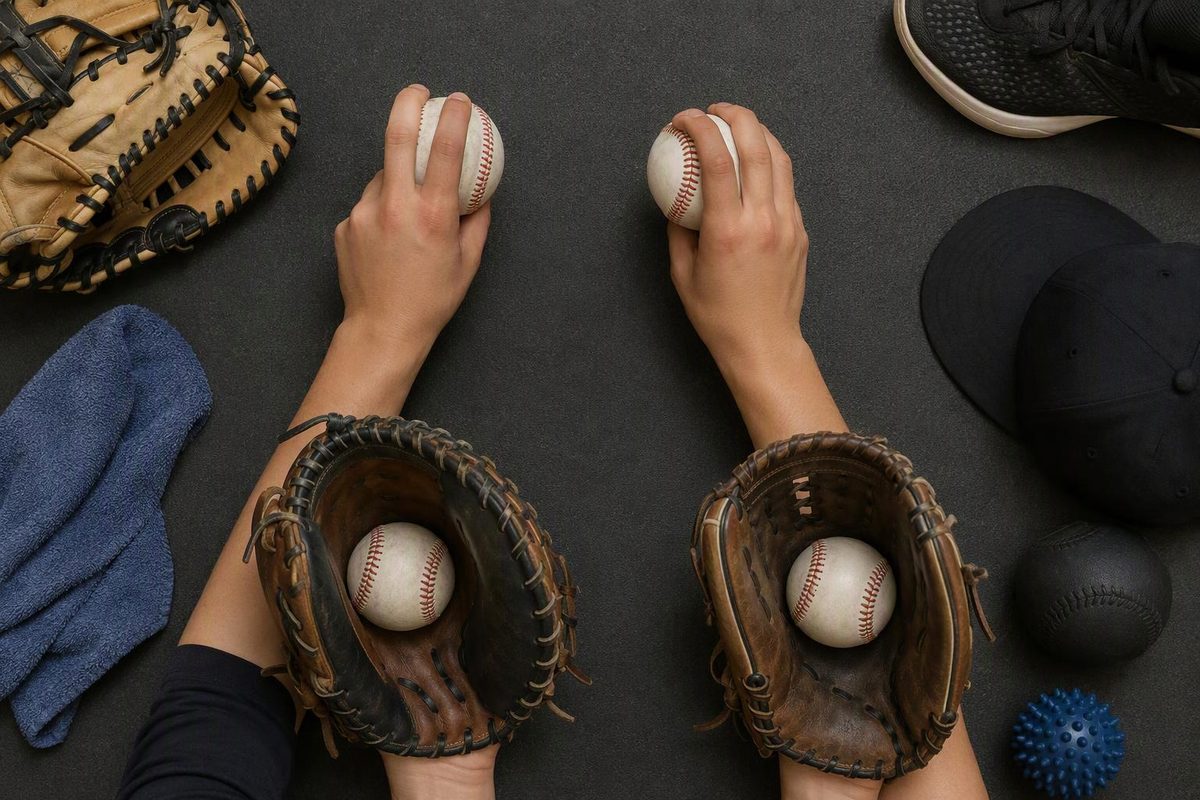
A circle changeup is a slower pitch thrown with a fastball-like delivery: make a relaxed circle with your thumb and index finger, wrap the other three fingers around the ball, and hold it slightly deeper than your fastball. The circle describes the grip—not a circular wrist motion. The goal is to make the hitter expect a fastball, then disrupt that timing with a slower arrival, as MLB’s changeup guide explains. If the circle requires a stretch or hard squeeze, use a more comfortable changeup grip instead.
Choose your grip fit and current result to find the next check—not an extra throwing session.
Find Your Next Grip Check
Find the Grip Without Looking
Rebuild the comfortable grip inside your glove. If you can find it without looking, compare a few fastball–changeup pairs within an already-planned, warmed-up throwing session.
Ask a coach whether the deliveries look alike and the receiver whether the changeup arrives more slowly, near the target. Do not add a separate session.
Sources: USA Baseball grip drills, MLB changeup guide, and the article’s cited workload guidance. Results are next checks, not a diagnosis or a measured speed gap.
Set a Relaxed Circle Changeup Grip
Use a normal baseball and your throwing hand. Right- and left-handed pitchers use the same finger arrangement, mirrored. Start with the ball in your hand rather than trying to build the grip while moving through a delivery.
- Make a relaxed “OK” sign. Bring your thumb and index finger together along the side of the ball. Do not squeeze them together so firmly that the rest of your hand becomes tense.
- Wrap the other three fingers around the baseball. Let the ball sit comfortably against the circle, with the middle and ring fingers across the upper surface and the pinky supporting the outside.
- Try a two-seam orientation as one starting option. Rotate the ball so the middle and ring fingers contact the two narrow seams. If that feels awkward, adjust the seam position rather than stretching your fingers to match it.
- Set the ball slightly deeper than your fastball grip. It should sit farther back in the hand, but not so deeply that you struggle to release it.
- Keep the hold relaxed but secure. You should be able to move through your delivery without the ball slipping or needing a hard squeeze.
The basic circle-and-three-finger arrangement appears in USA Baseball’s pitching drill collection, while MLB describes the deeper hand position. Neither description requires you to copy another pitcher’s hand shape exactly.
Seam placement is an option, not a fixed requirement. In a FanGraphs interview, Dereck Rodriguez described his two-seam circle change with the middle and ring fingers over the seams and a loose hold. That is a useful starting example, not proof that every pitcher needs the same seam orientation.
Check Fit Before Checking Movement
Form the grip several times without throwing. Look at where the middle and ring fingers land, then release the ball and rebuild the grip. The checkpoint is whether you can return to a comfortable arrangement—not whether the circle looks perfect.
Next, try finding that grip inside the glove without looking. If you need to stop and rearrange every finger, simplify the setup before adding pitches. A seam position that is easy to find is more useful at this stage than one you can reproduce only while staring at the baseball.
Separate depth from pressure. Moving the ball farther back in the hand and squeezing it harder are different changes. The starting goal is a slightly deeper, comfortable hold; a hard squeeze is not the test of whether you have made a circle changeup correctly.
Use a Three-Finger Changeup If the Circle Does Not Fit
Do not force your thumb and index finger together around the ball. Try a three-finger changeup instead: index, middle and ring fingers on top, with thumb and pinky supporting underneath. USA Baseball includes this as another changeup option in its drill collection.
Use comfort as the decision, rather than assuming an age or hand size automatically determines the right grip. If making the circle pulls the other fingers out of position or leaves the ball insecure, the alternative gives you a different setup to test.
The circle grip is one way to throw a changeup, not a requirement. Switching grips does not change the main task: deliver the pitch with a fastball-like motion and see whether it arrives more slowly with usable location.
Keep Your Fastball Delivery and Avoid a Forced Wrist Twist
Use your usual leg lift, stride, arm path and follow-through. The cue is “same delivery, different grip,” not “push it softly.” Fastball-like arm action means matching your normal motion—not throwing harder than usual to compensate for an unfamiliar grip.
Let the grip produce the speed difference. In the FanGraphs interview, Dylan Bundy explained that deliberately slowing the arm or body reduces deception because hitters can notice it. A pitch that arrives more slowly only because you visibly slow down has not met the same test as a changeup thrown with your normal delivery.
For the first attempts, do not add a deliberate wrist twist or force a “thumbs-down” finish. Have a coach check your natural release before introducing another cue. USA Baseball’s collection includes a turnover cue; it need not be your first instruction while learning the grip.
The distinction matters when troubleshooting. If the ball does not behave as expected, changing the grip, slowing the delivery and twisting the wrist at once leaves you unable to tell which adjustment caused the new result. Start with the comfortable grip and your familiar motion, then let a coach observe the release.
Treat Arm-Side Movement as a Possible Result
A changeup can drop and move toward the throwing-arm side—right for a right-hander, left for a left-hander—as MLB explains. That movement is not guaranteed by forming the circle.
Do not judge the first attempts solely by whether the ball visibly fades. First check whether you can hold and release it comfortably, whether the delivery resembles your fastball, and whether the receiver sees a slower arrival near the target.
Nor should a ball that repeatedly slips or spikes be counted as successful movement. Those results call for a grip and release check. Avoid adding a forced wrist action just to make the pitch resemble a particular example.
Compare the Grip in Planned Catch Play
After your normal warm-up, replace a small portion of an already-planned throwing session with a few fastball–changeup pairs at a comfortable catch-play distance. This is a comparison within the session, not a reason to add a separate block of throws afterward.
Use the same intended target for the pair. Ask a coach whether the deliveries look alike and the receiver whether the changeup arrives more slowly, near the target. These are separate observations: a slower pitch can still have an obvious delivery change, and a matched delivery can still produce a changeup that stays too firm.
The sources cited here do not provide a required speed gap for this grip check. Without a measured figure, describe the receiver’s observation as “arrived more slowly,” not as a specific velocity difference. There is also no fixed number of practice throws supplied here; keep the comparison inside the pitcher’s existing workload plan.
A simple note after the comparison can record the grip used, whether the delivery looked different, and what the receiver saw. Keep the description concrete—“ball slipped,” “arrived near the target,” or “arm visibly slowed”—rather than declaring the grip good or bad from one outcome.
For the full throwing progression and common pitch-location problems, use our changeup practice guide. The checks below are narrower: they help decide whether to keep the current setup, adjust one grip feature, or stop and get an observation.
Match the Next Adjustment to the Actual Problem
| Observed Result | First Check | Next Step |
|---|---|---|
| Circle feels strained | Finger fit | Try the three-finger option |
| Pitch stays too firm | Grip depth | Try slightly deeper, without slowing |
| Ball slips or spikes | Hold and release | Reset comfortably; have a coach watch |
| Delivery visibly slows | Motion comparison | Return to your usual delivery cue |
| Slower, near target | Repeatable grip | Keep the setup for later planned practice |
If the Pitch Stays Too Firm
Try a slightly deeper grip without slowing your motion. Make that the only adjustment for the next comparison. Do not combine it with a new seam orientation or a harder squeeze, because then you cannot isolate the effect of depth.
If moving the ball deeper makes the grip tense or awkward to release, return to the comfortable position. “Deeper” is a starting adjustment, not an instruction to bury the ball as far into the hand as possible. Have the coach check what actually changes during delivery before continuing to alter the setup.
If the Ball Slips or Repeatedly Spikes
Return to a comfortable, secure hold and have a coach observe it. Check the grip outside the glove first, then see whether you can rebuild the same arrangement without looking.
Do not respond automatically by squeezing harder or forcing the wrist downward. The visible outcome tells you that the pitch is not yet repeatable; it does not, by itself, identify the cause. A coach’s observation helps separate a grip that is difficult to hold from a delivery or release that changes when you throw it.
If You Slow Down to Throw It
Go back to the cue “same delivery, different grip.” Ask the coach to compare the fastball and changeup rather than judging the changeup alone. The question is whether your usual leg lift, stride, arm path and follow-through remain recognizable across both pitches.
Do not try to fix a visibly slower delivery by throwing harder than normal. Restore the familiar motion first, then reassess whether the comfortable grip creates the slower arrival. Change only one grip feature at a time if another adjustment is needed.
If It Arrives Slower but Misses the Target
Keep speed, delivery and location as separate checks. A slower arrival is useful feedback, but it does not establish command. Record where the pitch went and ask the coach to watch before making several grip changes to chase the target.
Use the linked practice guide for the broader location progression. During this grip comparison, the useful result is a setup you can describe and repeat—not a different hand position after every miss.
Keep Youth Changeup Practice Inside Workload Limits
For ages 9–12, Pitch Smart advises avoiding pitches other than fastballs and changeups, while following pitch-count limits, required rest and fatigue monitoring. That guidance applies to the stated age group; it does not establish one pitch-selection rule for every age.
Being a changeup does not make a throw disappear from the workload. Fit grip comparisons into the existing plan rather than adding a separate session. Dry grip checks let a pitcher work on finding the ball in the hand without adding throws, but any subsequent throwing still needs to fit the plan.
Stop throwing when fatigued rather than trying another grip to work around it. If elbow or shoulder pain occurs, discontinue pitching until evaluated by a sports-medicine physician, consistent with ASMI’s adolescent pitching recommendations.
The next usable step is a comfortable grip, a familiar delivery and an observed comparison—not a forced circle, a manufactured wrist finish or more throws after the planned session is over.