
The Biggest Youth Pitching Risks—and How to Manage Them
Excessive competitive pitching, throwing while fatigued and inadequate recovery are the clearest modifiable concerns—and each can be managed.
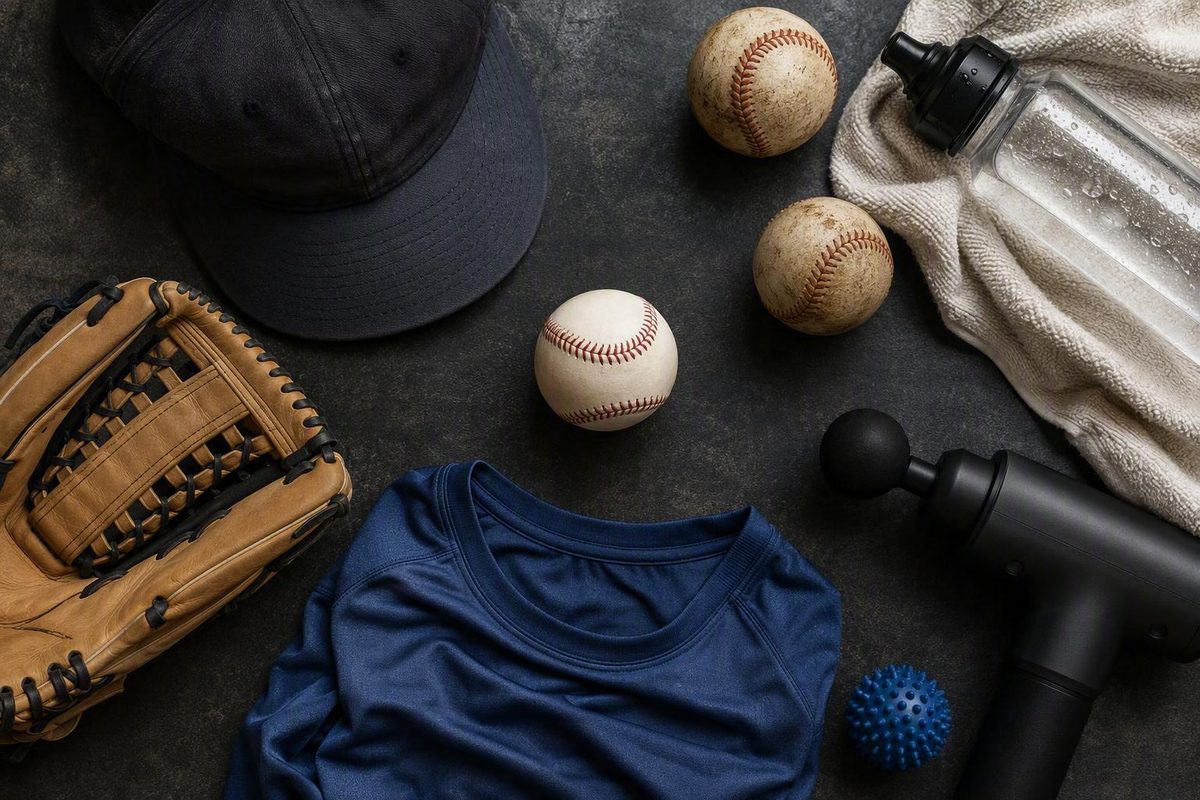
The clearest modifiable concerns for youth pitchers are excessive competitive pitching, throwing while fatigued, and inadequate recovery. Families and coaches should track workload across every team and setting, use age-based limits as ceilings rather than goals, schedule meaningful breaks, and stop throwing when pain, fatigue, or declining function appears. These steps reduce avoidable exposure, but no pitch count, delivery, program, brace, or product can guarantee protection from a UCL injury or Tommy John surgery.
The short answer: workload, fatigue, and recovery matter most
Not every proposed risk factor has equal support. Much of the research concerns general arm injury, elbow injury, or combined shoulder-and-elbow surgery—not confirmed UCL tears or reconstruction specifically.
| Evidence category | Factors | How to interpret them |
|---|---|---|
| Stronger adolescent associations | Excessive competitive pitching; pitching while fatigued | Prioritize these modifiable exposures |
| Recurring overuse concerns | Inadequate recovery; year-round pitching | Important workload patterns, but neither alone proves surgery will occur |
| Possible contributors | Multiple teams; pitching plus catching; poor mechanics; poor conditioning; previous elbow injury | Plausible or observed associations with less definitive youth-specific UCL evidence |
| Primarily professional findings | Higher velocity and certain pitch characteristics | Relevant context, but professional estimates cannot quantify a child’s risk |
| Unsupported prevention claims | A particular count, technique, program, brace, or product guarantees prevention | No such guarantee is supported |
The American Sports Medicine Institute identifies competitive pitching volume and pitching while fatigued as strongly linked to adolescent pitching injury. It describes multiple-team participation, year-round pitching, catching when not pitching, poor mechanics, and poor conditioning more cautiously as factors that may increase risk. Its position statement emphasizes cumulative overuse rather than one uniquely dangerous pitch in its discussion of Tommy John injuries.
These distinctions matter. A study of elbow pain cannot establish the probability of UCL reconstruction. Research using combined shoulder-and-elbow surgery as its outcome cannot automatically be narrowed to Tommy John surgery. Findings in professional pitchers also cannot be used to calculate risk for a 12-year-old.
UCL injury is multifactorial. Workload, recovery, fatigue, physical development, mechanics, velocity, conditioning, and injury history may interact. The available evidence does not support calculating an individual young pitcher’s probability of needing surgery from those factors alone. The practical goal is to control the exposures that players, families, and coaches can change.
What Tommy John surgery risk actually means
Tommy John surgery is reconstruction of the elbow’s ulnar collateral ligament, or UCL, using a tendon graft. The UCL helps stabilize the inside of the elbow during throwing. Repeated overhead throwing places stress on the ligament, and damage may accumulate over time rather than begin with one identifiable pitch, as clinical explanations from Hartford HealthCare and other approved medical sources describe.
Three situations should not be confused:
- Elbow discomfort: A symptom with multiple possible causes.
- Diagnosed UCL injury: A medical finding that requires an appropriate clinical assessment.
- UCL reconstruction: A surgical decision made after the injury, the athlete’s needs, and available treatment options have been evaluated.
Concern about youth procedures is justified, but headline figures require context. In 2025, Hoag Orthopedic Institute reported an estimate that athletes under 18 accounted for nearly one-third of UCL procedures at some major orthopedic centers. This is a selected-center estimate reported by the institute—not a national prevalence figure for youth pitchers or youth UCL injuries according to the Hoag report.
Count the workload that one team cannot see
A team can manage only the activity it knows about. A player may pitch for a school team, recreational league, travel program, showcase, fall league, camp, or private instructor while also throwing bullpens or playing catcher.
Commentary about Little League’s pitch-count system has identified a potential coverage gap: official game records may not include throwing performed through unrelated teams, showcases, fall programs, or lessons. That is the commentary’s criticism of fragmented tracking, not proof that every player’s workload goes unrecorded in every baseball setting.
For pitchers ages 15–18, Pitch Smart advises following workload guidance across leagues, tournaments, and showcases and avoiding participation on multiple teams at the same time. A shared, player-owned log is a practical way to make those exposures visible to the adults responsible for scheduling.
| Field | What to record |
|---|---|
| Date and organization | School, travel, league, showcase, lesson, camp, or independent work |
| Game workload | Game pitches and innings pitched |
| Other throwing | Warm-ups, bullpen or lesson work, catching, weighted-ball work, or other high-intent throwing |
| Recovery status | Fatigue, pain, soreness, performance changes, and days since the last pitching appearance |
Game pitches can be added directly.
Consider an 11- or 12-year-old scheduled to pitch for a travel team on Saturday. Before the player takes the mound, the responsible adult reviews the shared log and checks with the school or league coach if any recent activity is unclear. The adult confirms the most recent game-pitch total and whether the governing recovery period has passed. The same coordination principle appears in the broader Pitch Smart pitching guidelines.
If the player reports fatigue during warm-ups, the adult should not treat unused pitches below the daily maximum as permission to continue.
Use age-based pitch limits as guardrails
Little League and Pitch Smart publish similar daily maximums, although they govern different contexts. These figures are ceilings, not targets or guarantees.
| Age | Little League daily maximum | Pitch Smart daily maximum |
|---|---|---|
| 7–8 | 50 | — |
| 9–10 | 75 | 75 |
| 11–12 | 85 | 85 |
| 13–16 | 95 | 95 |
| 17–18 | — | 105 |
Little League Regulation VI(c) sets the listed limits and pairs pitch totals with mandatory rest. Tournament rules, league age, and other conditions may affect what applies, so families and coaches should consult the current official Little League pitch-count rules before each season or tournament.
Pitch Smart also pairs daily maximums with tiered rest requirements. The complete younger-age thresholds are not reproduced here; readers should check the current official guidance for the pitcher’s age and governing organization.
For ages 15–18, the verified Pitch Smart schedule is:
| Age | Pitches thrown | Required rest |
|---|---|---|
| 15–16 | 1–30 | 0 days |
| 15–16 | 31–45 | 1 day |
| 15–16 | 46–60 | 2 days |
| 15–16 | 61–75 | 3 days |
| 15–16 | 76–95 | 4 days |
| 17–18 | 1–30 | 0 days |
| 17–18 | 31–45 | 1 day |
| 17–18 | 46–60 | 2 days |
| 17–18 | 61–80 | 3 days |
| 17–18 | 81–105 | 4 days |
These thresholds and related restrictions are published in the official Pitch Smart guidelines for ages 15–18.
A pitcher does not earn the maximum simply by being eligible to throw. The numerical rule sets an outer boundary; fatigue, pain, or declining function may require stopping earlier. Do not assume that school, travel, showcase, tournament, and recreational programs use identical limits or eligibility rules.
Build recovery into the season, not just between games
“Rest” can refer to three different periods:
- Post-outing rest: The required number of days before pitching again.
- Time away from competitive pitching: No game pitching, although some other throwing may continue.
- A continuous break from overhead throwing: No pitching, bullpens, throwing programs, or other overhead throwing during that period.
For pitchers ages 15–18, Pitch Smart recommends no more than 100 combined innings in any 12-month period. It also recommends at least four months away from competitive pitching each year, including two to three continuous months without overhead throwing. The same guidance advises against pitching multiple games in one day or appearing as a pitcher on three consecutive days.
ASMI separately recommends at least two consecutive months each year without any throwing. These are organizational workload recommendations, not thresholds at which injury prevention becomes certain.
Annual breaks need to be planned. Moving directly from school baseball to travel ball, showcases, fall competition, and winter pitching instruction can create a continuous throwing year even if each program separately allows time between games.
Recovery also operates from outing to outing. Unusual fatigue, inability to repeat the delivery, loss of command, or arm symptoms should end a session even when the formal count permits more pitches. A numerical limit cannot show how well one particular arm recovered.
Put velocity, mechanics, catching, and curveballs in context
Higher velocity has been associated with injury or UCL reconstruction among elite and professional pitchers. That supports caution around repeated high-intent throwing, but professional effect estimates cannot be used to calculate a child’s risk. Professional pitchers differ from children in physical maturity, competition level, training history, workload, and pitch characteristics.
Mechanics and conditioning may affect how force moves through the legs, trunk, shoulder, and elbow. Good instruction can help a pitcher move efficiently and repeat the delivery, but it cannot cancel excessive volume or fatigue. “Good mechanics” should never become permission to ignore recovery.
Pitching for multiple teams can make total exposure harder to coordinate. Playing catcher between pitching appearances can add high-intent throws and reduce recovery opportunities. ASMI treats both as possible contributors rather than proven standalone causes of youth UCL reconstruction.
Curveballs also require proportionate treatment. ASMI’s cited biomechanical and epidemiological evidence did not show a strong association between curveballs and youth elbow injuries. The organization nevertheless cautions that an immature or poorly coached pitcher may lack the physical control or instruction required to throw the pitch with sound mechanics. Its practical development sequence is basic throwing first, followed by fastball command and a changeup before breaking pitches.
Full-effort flat-ground throwing should not automatically be labeled easy or safe. ASMI reports that elbow torque during full-effort flat-ground throwing may be similar to full-effort mound pitching. The arm responds to effort and loading, not just whether the throw came from a mound.
Know the stop-throwing signals
Pain and functional decline are not challenges to pitch through. The player should stop throwing and report symptoms to a parent, coach, athletic trainer, or another responsible adult rather than trying to finish an allotted pitch count.
Stop-throwing guide
Signal Immediate action Persistent pain on the inside of the elbow during or after throwing Stop throwing and report it Soreness or stiffness that changes the delivery End the session; do not try to “loosen through it” Swelling or tenderness Stop and arrange appropriate evaluation Reduced accuracy or unexplained velocity decline Treat it as possible fatigue or impaired function Pain during ordinary daily activities Stop throwing and seek medical guidance
Persistent pain, swelling, tenderness, declining function, or symptoms affecting daily activities warrant evaluation by a qualified medical professional. These warning signs are described in sports-medicine guidance, although one detailed published list comes from a commercial arm-support company and should not be treated as independent proof that its products prevent injury in its UCL risk overview.
It also cannot prescribe an individualized rehabilitation or return-to-throwing program.
Previous elbow trouble deserves attention. In a cross-sectional survey of 214 amateur and professional pitchers, a history of childhood or adolescent elbow injury was more common among respondents who later reported a UCL injury. Because the study used self-reported histories and measured participants at one point in time, it does not establish that the earlier injury caused the later UCL problem as the published survey explains.
A practical risk-reduction checklist for every outing
Before pitching
- Review the shared workload log across school, travel, recreational, showcase, camp, lesson, and bullpen settings.
- Confirm the applicable age-based maximum and required recovery period.
- Ask directly about fatigue, soreness, stiffness, pain, and changes in normal throwing.
- Warm up properly before pitching.
- Resolve conflicting or missing workload records before the player takes the mound.
During the outing
- Track game pitches in real time rather than reconstructing the total later.
- Watch for altered mechanics, loss of command, declining velocity, visible fatigue, or guarding of the arm.
- Remove the pitcher for pain, fatigue, or declining function even if the numerical limit has not been reached.
- Do not use a showcase, championship, or other important game as a reason to disregard symptoms.
After the outing
- Record the final pitch count and innings pitched.
- Note bullpen work, catching, unusual fatigue, pain, stiffness, or performance changes.
- Record the applicable recovery period.
- Share the information with every team, coach, and instructor before the next throwing session.
Across the year
- Add innings and appearances across all organizations rather than treating each schedule separately.
- Schedule genuine breaks from competitive pitching.
- Plan a continuous period without overhead throwing rather than simply replacing games with high-intent lessons.
- Avoid stacking school, travel, showcase, fall, and winter programs into one uninterrupted pitching calendar.
- Reconsider the workload after pain, injury, unusual fatigue, or a substantial change in throwing intensity.
Coordination, limits, recovery, mechanics instruction, and conditioning can reduce avoidable exposure. They cannot guarantee that a pitcher will avoid a UCL injury or surgery. The practical response to Tommy John concerns is not searching for one dangerous pitch; it is managing cumulative throwing and treating fatigue or elbow symptoms as reasons to stop.
This guidance is educational. It does not replace a coach who can observe the pitcher or a qualified clinician who can evaluate the individual arm.
Frequently asked questions
Why is UCL reconstruction called Tommy John surgery?
The procedure is named for major-league pitcher Tommy John, who became the first player to undergo the UCL reconstruction that later took his name after tearing the ligament in 1974. He returned to pitch for 14 more seasons, establishing the operation as a possible path back to baseball—not a guarantee of improved performance according to MLB’s account of his career and surgery.